Trump Slashes Clean Energy Loans, Bets Big on Gas and Nuclear
The Trump Administration continues to revise, restructure, and cancel billions of U.S. dollars of Biden-era loans and funding commitments to clean energy projects as the United States shifted its policy to supporting fossil fuels and nuclear power as part of its energy dominance agenda.
In the latest instalment of canceled or revised funding, the Department of Energy this week announced that the Office of Energy Dominance Financing (EDF), previously known as the Loan Programs Office (LPO), is restructuring, revising, or eliminating more than $83 billion in what it called “Green New Scam” loans and conditional commitments from the Biden-era loan portfolio.
EDF has reviewed in the past year each borrower of these funds “to ensure loans were a responsible investment of taxpayer dollars and aligned with the Administration’s priorities,” the Department of Energy said.

EDF is reforming the office to more responsibly steward taxpayer dollars and support financing opportunities that accelerate the deployment of affordable, reliable, and secure American energy.
For the Trump Administration, affordable, reliable, and secure energy means fossil fuels and nuclear power, and excludes solar and wind capacity projects.
The Biden Administration has committed over $104 billion in financing, of which $85 billion was closed or committed between Election Day 2024 and Inauguration Day 2025, DOE said.
Related: Azerbaijan Promises More Gas to Europe as Production Reality Lags
“We found more dollars were rushed out the door of the Loan Programs Office in the final months of the Biden Administration than had been disbursed in over fifteen years,” Energy Secretary Chris Wright said.
Out of the $104 billion in Biden-era principal loan obligations, EDF has completed or is in the process of de-obligating over $29.9 billion (about 29%) and has completed or is in the process of revising another $53.6 billion (approximately 51%) of this total.
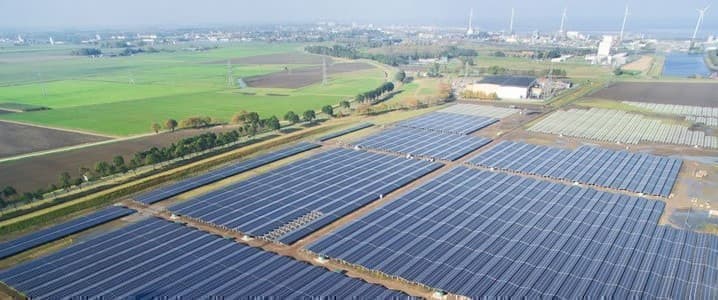
EDF has also eliminated about $9.5 billion in government-subsidized, intermittent wind and solar projects, and, where possible, replacing those projects with natural gas and nuclear uprates that provide more affordable and reliable energy, DOE said.
The financing vehicle now has more than $289 billion in available loan authority, and the restructuring of the priorities of the loan office means that EDF will be backing six energy sectors. These are nuclear energy; coal, oil, gas, and hydrocarbons; critical materials and minerals; geothermal energy; grid and transmission; and manufacturing and transportation.
The latest axing of Biden-era loans to energy projects shouldn’t be a surprise. The Trump Administration has been looking for ways to cancel billions of dollars of commitments to clean energy projects, including solar, wind, and EV production. Hundreds of projects worth dozens of billions have been terminated since President Donald Trump took office a year ago.
In the year since Inauguration Day, the Trump Administration has made abundantly clear that it will back fossil fuels and gas for affordable and reliable energy and will look to degrade solar and wind as contributors to meeting America’s surging power demand—the highest demand growth since the 1990s, due to AI, data centers, and advanced manufacturing.
Earlier this month, the Trump Administration gave the latest signal that it prefers natural gas, coal, and nuclear power to provide the bulk of new generation supporting the data center build-out.
Energy Secretary Wright, Interior Secretary Doug Burgum, and the bipartisan group of governors of all 13 states served by PJM Interconnection issued a so-called Statement of Principles urging the biggest U.S. power grid operator to hold a capacity auction, in which leading technology companies have committed to funding this new generation capacity.
Coal, natural gas, and nuclear will be the pillars of the new U.S. power capacity, providing reliable baseload, and ending years of “misguided policies” that favored intermittent energy resources such as solar and wind power, the U.S. Administration said.
Following the call on PJM for a capacity auction, the American Clean Power Association (ACP) said in an analysis that without timely deployment of significant new clean energy resources, Mid-Atlantic and Midwest states “face serious reliability risks and dramatically higher electricity costs over the next decade.”
The mismatch between immediate demand growth and the lead time of new conventional generation means that, without new clean energy development, ratepayers across nine PJM states would pay an additional $360 billion over the next ten years, driven primarily by higher wholesale electricity prices. The average residential household would see $3,000 to $8,500 in additional electricity costs over the next decade, ACP estimates.
“To keep the lights on and power economic growth, PJM needs resources that can be built quickly, operate reliably, and protect customers from surprises on their electric bills,” said John Hensley, Senior Vice President of Markets and Policy Analysis at ACP.
By Tsvetana Paraskova for Oilprice.com
More Top Reads From Oilprice.com