US court restores 5% safe harbor for large solar projects
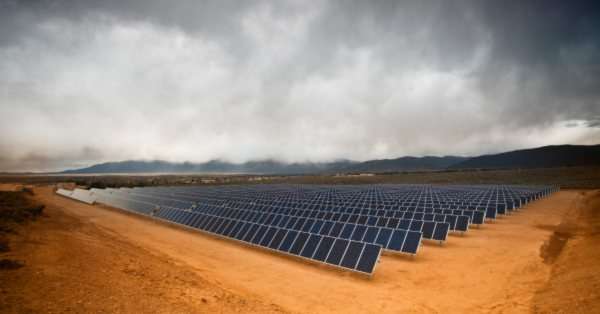
A US federal district court has fully vacated IRS Notice 2025-42, restoring the 5% safe harbor method for large-scale solar and wind projects to establish beginning of construction for federal tax credits. The June 6, 2026, ruling arrives just 27 days before a critical July 4 statutory deadline, temporarily reopening a crucial qualification pathway for utility-scale developers facing a severe placed-in-service cliff. The universal vacatur immediately reinstates prior guidance under Notice 2013-29 and Notice 2018-59, allowing developers to lock in tax credit eligibility by incurring 5% of a facility’s total qualifying cost rather than relying strictly on physical site work.

Under the One Big Beautiful Bill Act signed in 2025, clean energy projects that begin construction on or before July 4, 2026, retain a four-year window to be placed in service, extending to the end of 2030. Projects missing this cutoff face an accelerated deadline of December 31, 2027, to qualify for the Section 45Y clean energy production tax credit and the Section 48E clean electricity investment tax credit. To prove construction has commenced, developers historically relied on either starting significant physical work or meeting the 5% cost threshold, both of which require continuous efforts toward project completion.
IRS Notice 2025-42, issued in August 2025 to implement Executive Order 14315, abruptly eliminated the 5% safe harbor for all wind facilities and solar projects larger than 1.5 MW AC. The agency claimed the restriction was necessary to prevent artificial manipulation of eligibility and the circumvention of statutory credit termination dates. A coalition of environmental and industry groups subsequently challenged the notice in the US District Court for the District of Columbia, arguing the sudden policy reversal violated the Administrative Procedure Act.
Presiding Judge Colleen Kollar-Kotelly ruled that the IRS failed to meet the standard for reasoned decision-making. The court found that the agency did not adequately explain how the safe harbor allowed developers to circumvent statutory deadlines, ignored the reliance interests created by more than a decade of established precedent, and failed to justify singling out large solar and wind assets while leaving the safe harbor intact for small solar installations. Because the court determined that only universal vacatur could fully redress injuries flowing from the notice’s effects on third-party developers, the ruling applies nationwide.
The Natural Resources Defense Council, a plaintiff in the lawsuit, said in a statement that the decision adds to a string of defeats for the administration and its wide-ranging attempts to block new wind and solar energy projects. The Treasury Department has not yet responded to requests for comment regarding the ruling.
Despite the legal victory, energy law firms are advising developers to proceed with extreme caution due to the likelihood of an emergency stay, a government appeal, or swift re-issuance of IRS guidance with amended legal reasoning. Legal counsel at Gibson Dunn warned that absent immediate IRS acquiescence, the procedural uncertainty renders sole reliance on the 5% safe harbor highly risky before the July 4 cutoff. Firms including Foley & Lardner are urging developers to maintain a dual-track strategy, simultaneously documenting both the 5% cost threshold and the physical work test to protect tens of billions of dollars in utility-scale pipeline investments.