China reportedly suspends approvals for new storage cell capacity as plans top 2 TWh
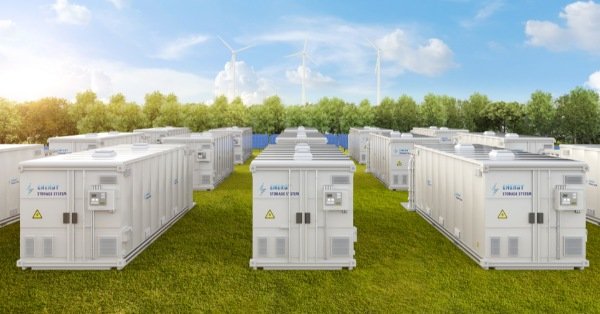
Chinese regulators have suspended approval and further progress on energy storage manufacturing projects that are still at the planning stage and have not broken ground, multiple supply chain sources told Cailian Press in a report published September 6, 2026, as authorities survey how much cell capacity the country has already built and how much more sits on the drawing board.
Storage cells are one of the priority areas of that survey. Projects that have completed filing and are already under construction are unaffected, and the sources described the move as a calibrated tightening rather than a blanket halt, to be adjusted as real demand develops. No ministry has published a formal notice and the report does not name the agencies involved, so the measure currently functions as administrative guidance rather than codified rule.
The scale regulators are trying to contain has been set out by the industry itself. Tian Qingjun, senior vice president of Envision Group, said storage cell expansion announced this year alone exceeds 800 GWh, that roughly 1.2 TWh to 1.5 TWh of annual capacity will be commissioned by the end of 2026, and that total planned capacity now exceeds 2 TWh. “This has already gone far beyond the real demand of the global market,” Tian said. Envision is itself a cell producer, and the figures are a company estimate rather than an official tally.

Speaking at the 2026 World Power Battery Conference in Yibin, Sichuan, on September 4, Tian framed the risk in explicitly solar terms, citing China’s photovoltaic manufacturing downturn as the outcome storage must avoid, according to National Business Daily. He also noted that midday zero and negative prices have already appeared in markets with high solar penetration, the condition that makes six- to eight-hour duration necessary.
Demand signals had already turned before the pause. China commissioned 21.81 GW/58.60 GWh of new-type energy storage, the category excluding pumped hydro, in the first half of 2026, down 18% in power and 16% in energy year on year, even as cumulative installed capacity reached 168.3 GW/448.7 GWh, up 59% and 71%, according to CNESA DataLink data released by the China Energy Storage Alliance on August 27, 2026. CNESA figures reported by Shanghai Securities News put commissioned storage cell manufacturing capacity at 809.5 GWh as of the end of June, excluding lines that switch between EV and storage cells — roughly 40% of the planned total Tian cited.
The pause follows a year of escalating pressure on what Beijing calls involutionary competition. China’s Ministry of Industry and Information Technology (MIIT) convened battery manufacturers in November 2025 and, on January 7, 2026, held a joint meeting with the National Development and Reform Commission, the State Administration for Market Regulation and the National Energy Administration on competition order in the sector, according to IT Home. Reuters reported that MIIT urged manufacturers to optimize capacity and mitigate overcapacity risk, and that state-run China Daily, citing sources, placed CATL, BYD, Gotion High Tech and EVE Energy among some 16 companies at the January meeting, alongside storage integrators including Beijing HyperStrong and Trina Solar, itself a leading PV module maker.
For developers, EPCs and integrators outside China, the near-term question is price. Beijing restored a 2% consumption tax on lithium-ion cells, packs and clusters on September 1, 2026, rising to 4% in September 2027, while directly exported batteries remain exempt and the separate VAT export rebate was cut from 9% to 6% in April 2026 and is due to reach zero on January 1, 2027, pv magazine reported. Chinese suppliers signed 298 GWh of overseas storage orders in the first half of 2026, up 83% year on year, on CNESA’s own count.
Because the measure targets unstarted domestic projects rather than exports, retrofits or overseas plants, its most visible effect is likely to be slower greenfield capacity growth inside China while offshore expansion continues. Whether approvals resume once the capacity survey concludes, and whether a formal document follows the current window guidance, are the next markers to watch.