As hot summer, blackouts loom, Iraq looks to solar power
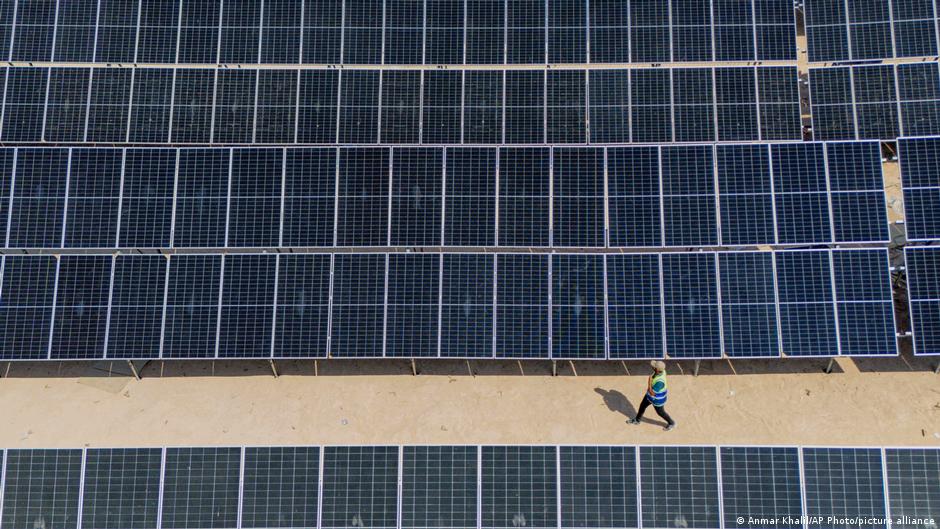
Iraq has long suffered through scorching summers that the country’s national grid hasn’t been able to keep up with. But it was only recently that Hiba al-Amiri’s family started to seriously consider getting solar panels installed at home to compensate for the annual summer blackouts.
“In the war, Iranian gas was cut and for four days, we had no electricity,” the Baghdad-based teacher told DW. Iran supplies up to 40% of the gas that Iraq needs to keep its power stations running, In March, Iran completely cut gas to Iraq after Israel attacked its gas fields.
“We were only using the generator,” al-Amiri continued. “After that, a lot of our neighbors were also talking about this [solar]. Everybody is really starting to think about it seriously.”
Installing solar panels in a private household costs somewhere between 5 and 10 million Iraqi dinars (around $3,800-$7,600/€3,200-€6,500), experts told DW. Al-Amiri said she and her brother are now saving money toward that goal, and hope to get a unit by next year.
“The thinking is that we will pay for this project [solar panels] in one year but then after that we won’t need to pay for the generator power again,” she explained.
Even on its best days, the Iraqi national grid only supplies private households between eight and 12 hours of electricity a day. Ordinary Iraqis compensate for the missing power by paying a subscription to local generator operators. Households in a city like Baghdad might pay between $100 (€86) and $300 a month to keep the lights on.
Old system frustrating, expensive
It’s not that Iraqis didn’t know about solar power, explained Harry Istepanian, an energy expert and founder of the Washington-based think tank, the Iraq Climate Change Center. “But the generator system was familiar, flexible and required no large upfront investment,” he said. “Solar, by contrast, requires capital, reliable equipment, batteries, technical installation and after-sales support.”
Additionally, as the International Renewable Energy Agency wrote in a 2025 report, energy tariffs in Iraq are heavily subsidized, which also discourages the private sector from investing in renewables.
But now, generator fees are rising and there’s no longer enough state-subsidized diesel for generators. “As a result, solar is gaining appeal. Not because Iraqis have suddenly discovered it but because the cost of relying on the old system has become higher,” said Istepanian.
Iraq gets some of the world’s highest levels of solar radiation which makes it a perfect candidate for solar energy, Amani Ibraheem Altmimi, an environmental consultant and professor of renewable energy sciences working in Iraq, pointedout. And Iraq actually opened its first solar energy research center in the 1980s.
“But wars and sanctions slowed work in the solar energy sector down,” said Altmimi. “Still, as researchers, we’ve been trying for years to educate the general public about renewable energy in all forms, including solar.”
Altmimi noted that in early 2025, Iraq’s central bank set up a scheme for citizens and small businesses to apply for loans, with favorable terms, to set up solar power systems.
Earlier this year, the Iraqi government also reduced import duties on components needed for solar power from 33% to 5% in an effort to reduce the costs.
Trending in Iraq
“But I wouldn’t call it a complete nationwide shift yet,” said Umud Shokri, an energy strategist and senior visiting fellow at George Mason University in the US. “But the change in attitude is becoming more visible.”
For years, there were few realistic alternatives but now, Shokri said, “repeated shortages, rising generator costs, fuel pressures and uncertainty over Iranian gas and electricity imports have made solar look more practical. Falling solar prices, more local installers and positive examples from early users have also helped.”
Statistics indicate that the trend toward solar in Iraq started in 2024 and is likely accelerating. According to the Arabic-language, specialist media outlet, Attaqa, Iraq’s imports of Chinese solar panels more than quadrupled between 2024 and 2025. They rose from 0.43 gigawatts to 1.89 gigawatts, and made Iraq the fifth-largest importer among Arab countries.
The United Arab Emirates, Saudi Arabia, Egypt and Algeria import more Chinese solar panels than Iraq, but no other country’s imports grew as much as Iraq’s in that period.
State bets on solar
It’s not just private Iraqi households either. Over the past few years, the government has outlined ambitious plans for renewable energies.
So far this year, the country’s national grid has produced around 29 gigawatts of electricity. Regular demand in Iraq requires around 40 gigawatts. In summer, the gap between supply and demand gets even bigger. Observers predict this summer’s demand at somewhere between 54 and 62 gigawatts.
The Iran war is making the situation even worse as Iranian gas supplies still haven’t returned to normal and other solutions the government had planned are running behind — such as a project to import power from the Gulf states — or not yet operational.
Additionally, because Iraq has not been able to export as much oil thanks to the Strait of Hormuz being blocked, government budgets are also suffering.
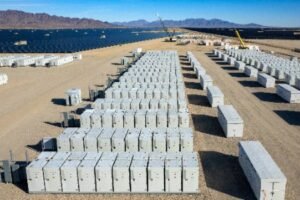
Over the past year, Iraq opened two industrial solar power plants. One in Karbala started operating last September and should eventually add 300 megawatts to the national grid. Another in Basra began operating part of its system in March and should be able to deliver 1 gigawatt when fully operational in 2028.
The government has said it also plans to install solar panels on government buildings, including schools, universities, banks and hospitals, and wants to be producing 12 gigawatts by the end of this decade.
Istepanian said Iraq needs a combination of both state-provided solar power and more private and business users to take pressure off the national grid at peak times. “Industrial solar parks such as Karbala are important,” he explained, “but Iraq also needs rooftop solar standards, certified installers, consumer protection, concessional loans and clear rules for connecting solar systems to the grid. Solar cannot be left entirely to the market, but it also cannot wait for the government alone.”
And all the experts DW spoke with agreed: Solar power alone won’t save Iraq from summer blackouts.
“Iraq’s electricity crisis is structural,” said Shokri. “Solar should be treated as one part of the solution, not a magic fix. Iraq still needs grid reform, better gas use, transmission upgrades, stronger institutions and serious investment in power generation.”
Edited by: Martin Kuebler