Govt allocates Rs. 2.63B for clean energy
By A Staff Reporter, Kathmandu, June 21: The government has allocated Rs. 2.63 billion for the renewable energy and energy efficiency sector in the upcoming fiscal year 2026/27, prioritising off-grid electrification, clean cooking technologies, solar energy expansion, waste-to-energy projects, and green hydrogen development.
Of the total allocation, Rs. 1.19 billion will be financed by the government of Nepal, while Rs. 1.43 billion will come from foreign assistance. The budget will be implemented through the Alternative Energy Promotion Centre (AEPC) under the Ministry of Energy, Water Resources and Irrigation.
The allocated funds will support the expansion of renewable energy and the promotion of energy efficiency through activities such as expanding electricity access, promoting clean cooking technologies, increasing productivity, generating energy from waste, supporting micro, small and medium enterprises (MSMEs), and implementing energy efficiency programmes. The budget will also be used to execute renewable energy projects through a Challenge Fund, promote green hydrogen, and strengthen the capacity of provincial and local governments.
In addition, the allocation will support technical assistance, technology monitoring and evaluation, the implementation of environmental and social safeguards, and the promotion of gender equality and social inclusion.
The government of Nepal’s Annual Policy and Programme for fiscal year 2026/27 states that off-grid solar, wind, and micro-hydropower systems will be expanded in areas not connected to the national electricity grid. It also directs the government to promote strategic green industries, including green hydrogen, green ammonia, and chemical fertilisers, through tax and customs incentives, concessional electricity tariffs, capital subsidies, and cost-friendly policies.
Furthermore, the government plans to initiate green hydrogen infrastructure to expand its commercial use in the transport sector. The AEPC’s annual programme and budget have been formulated in line with these policy directives.
Expanding electricity access
To expand electricity access, the government aims to install micro and small hydropower projects as well as solar mini-grid systems in areas beyond the reach of the national grid. It has set a target of generating 2.5 MW of electricity through micro and small hydropower plants and solar mini-grids. According to the Ministry of Energy, Water Resources and Irrigation, the government has accorded high priority to the promotion and expansion of clean cooking technologies.
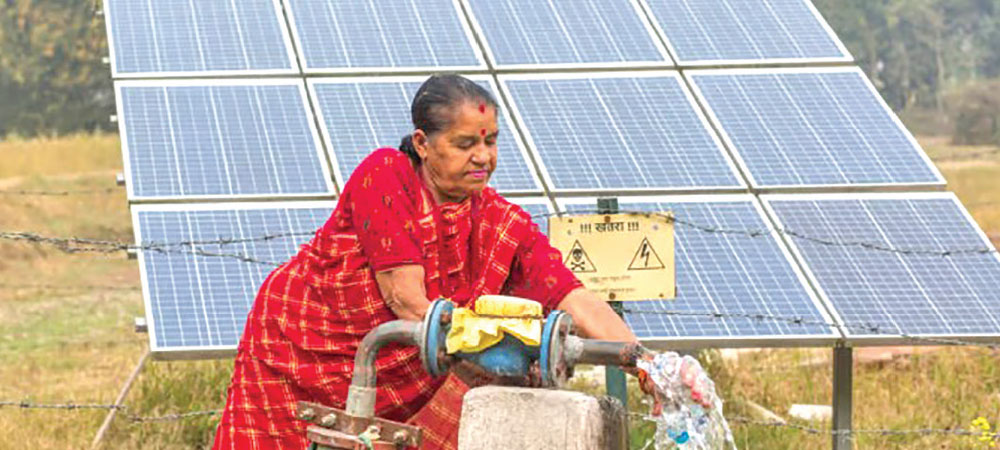
Under this programme, it aims to provide clean energy technologies—including electric cooking stoves, biogas plants, and improved cooking stoves—to approximately 250,000 households. It also plans to construct 10 institutional and commercial biogas plants and nine large-scale waste-to-energy projects. The budget also emphasises improving productivity, supporting agriculture, promoting decarbonization, and encouraging business development. Under these initiatives, the government has set a target to install 27 MW of rooftop solar systems and implement 120 solar-powered drinking water and irrigation projects.
It also plans to replace LPG used for thermal energy in 1,000 commercial and institutional establishments with biomass pellet stoves and install 10 solar thermal systems. In addition, the government aims to implement a 500-kWp agrivoltaic-based solar energy demonstration project.
How did you feel after reading this news?